
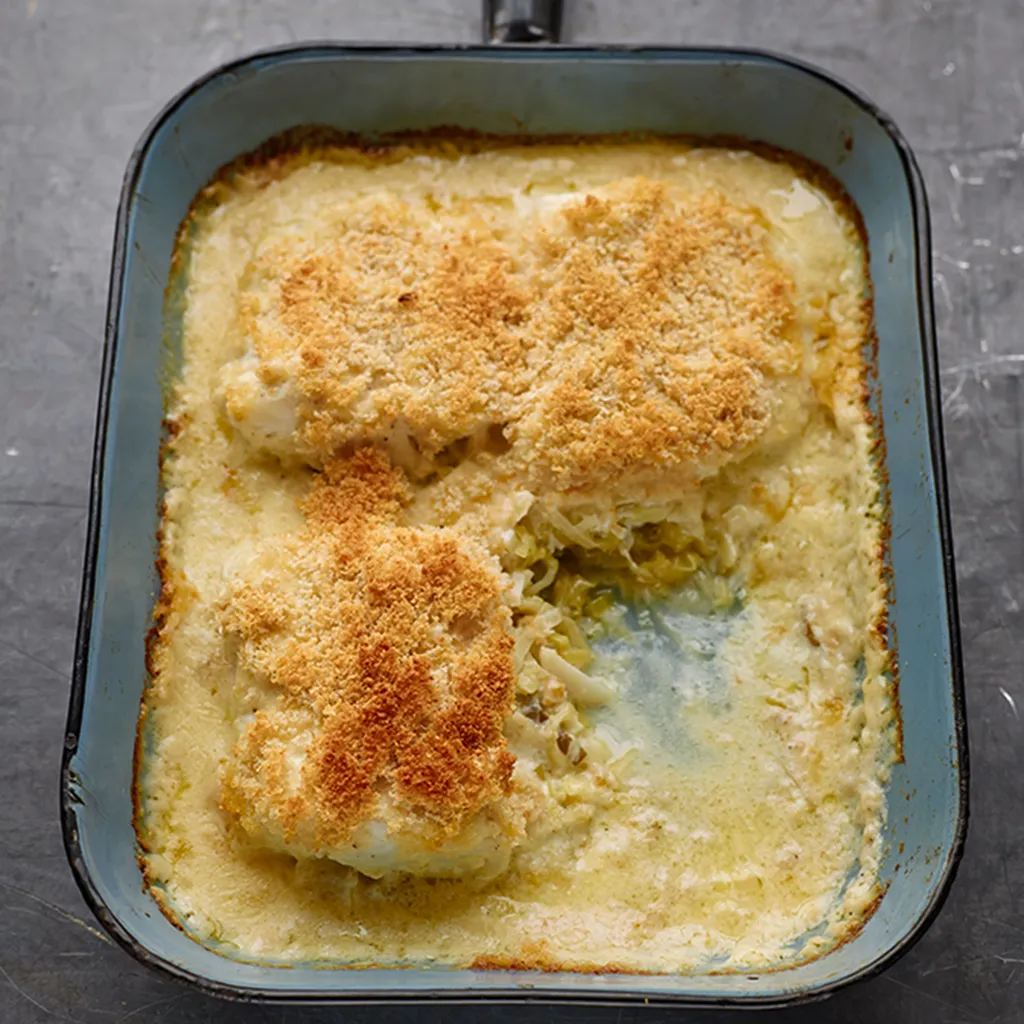
French Fish Pie
18oz white fish fillets , skinless, ~2cm / 0.8″ thick, cut into 5cm / 2″ x 3cm / 1.2″ pieces (any firm white cod, perch, snapper) (Note 1)
1/2 tsp cooking salt / kosher salt half for table salt, +50% for flakes
Fish pie sauce
1 tbsp extra virgin olive oil
2 tbsp unsalted butter
1 brown / yellow onion , diced
1/2 fennel (stalks cut off) , diced
1 leek , (white and pale green parts only), halved lengthwise, then cut into small dice
3 garlic cloves , finely minced or pressed
1/2 cup plain flour / all-purpose flour , (Note 2)
1/2 cup dry white wine , any type (Note 3)
1 1/2 cups HOT milk, full fat preferred
1 cup HOT thickened cream / heavy cream
1 tbsp fresh dill and tarragon
3/4 tsp cooking salt / kosher salt , half for table salt
1/4 tsp black pepper
Mash potato topping
2lbs starchy potatoes , peeled, cut into large chunks
2 tbsp (30g) unsalted butter , cold, cut in small cubes
1/3 cup hot milk, full fat preferred
3/4 tsp kosher salt
1/8 tsp ground white pepper , or black pepper
olive oil spray
First place potatoes in a large saucepan, cover with cold water. Bring to a boil, then simmer 25 minutes until very soft. You can start making the sauce while the potatoes are cooking.
Preheat oven to 200°C / 390°F (180°C fan). I highly recommend placing a baking tray lined with foil at the bottom of your oven to catch any bubbling filling that may leak during baking. Easier to clean!
Season fish – Pat fish pieces dry with paper towels and sprinkle all sides with salt. Set aside.
Sauté vegetables – Heat oil and butter in a 26cm / 10″ cast-iron skillet over medium-high heat. Add onion, fennel, leek and garlic. Cook 5 minutes until softened and light golden. Stirring regularly. (Note 4)
Make sauce – Add flour, stir for 30 seconds. Pour in white wine. It will simmer rapidly at first, then mix it in, it will look pasty. Slowly pour in the HOT milk and cream while stirring. Add salt and pepper. Bring to a simmer, cook 1 minute until thickened. The sauce should be quite thick, fully coating the back of the spoon then gently run down it. Set aside.
Finish mashed potato – (see instructions below).
Finish filling – Stir in dill. Add the fish pieces to the sauce, gently nestling them in so they’re mostly submerged. Then, using a spatula, carefully stir and move them around just enough to coat them in the sauce. Smooth the surface.
Potato topping – Pipe mounds of mashed potato swirls on the surface. My swirls have a 4.5cm base (1.6″), about 4cm tall (1.4″), then I fill gaps with small swirls/blobs. Make sure to use all the mash! Spray lightly with olive oil. (Note 5)
Bake – Bake 35 minutes, rotating halfway, until golden on top. If it’s not golden enough, place it under the grill for a few minutes.
Serve – Rest for 10 minutes before serving to cool slightly and let the sauce thicken a bit more.
MASHED POTATO:
Finish mash – Drain well. Pass through a potato ricer or return to the pot and mash well with a potato masher. Do not use a stick blender, it will overwork the starch, turning the mash gluey instead of fluffy. Add butter, salt and white pepper, stir until combined then add hot milk. Stir until smooth. It should be creamy but not loose (so it holds its shape when pipped).
Pipping bag – Transfer into a piping bag fitted with a star tip. (Note 6)
Recipe Notes:
1. Fish – Best made with white fish fillets that are around 2 cm / 0.8″ thick. Try to keep the pieces not thicker than that, otherwise they’ll stick out of the sauce. If your fillets are thicker, just cut them in half. It’s fine if some pieces are on the smaller side.
I’ve used ling for mine but it’s also suitable with barramundi, basa, cod, halibut, jewfish, pollock, snapper, tilapia (see full list in the ingredients section above).
Frozen fish works fine too, thaw then pat dry well before using.
2. Flour quantity – It may seem like a lot, but it’s intentional. The sauce needs to be thicker than usual so it holds the filling together. As the fish cooks it releases moisture, then the sauce loosens slightly in the oven and finally sets into a creamy filling as it cools.
3. Wine – Chardonnay is my go-to for cooking, it brings great flavour to dishes and was the wine most commonly used in the restaurants I worked in. No need to use anything expensive, and you can skip it altogether if you prefer a wine-free version.
4. Cooking vessel – If you don’t have a cast iron skillet, cook the sauce in a regular frying pan, then transfer it to a 2 litres baking dish before adding the fish, topping with the mash and baking.
5. Potato topping – No need to follow my piping style exactly. The goal is to create texture on top for crispy bits, so feel free to get creative – pipe, spread, fork it… whatever you like!
6. If you don’t have a piping bag – Use a ziplock bag, or spoon dollops over the top spread mash across the surface and rough it up with a fork.
Leftovers & storage – Store leftovers in an airtight container in the fridge for up to 3 days. Reheat in a 180°C / 350°F (160°C fan) oven until heated through so the topping crisps up again. Microwave works but will soften the potato. Not suitable for freezing.